1.1 Project Film
1.2 Intro
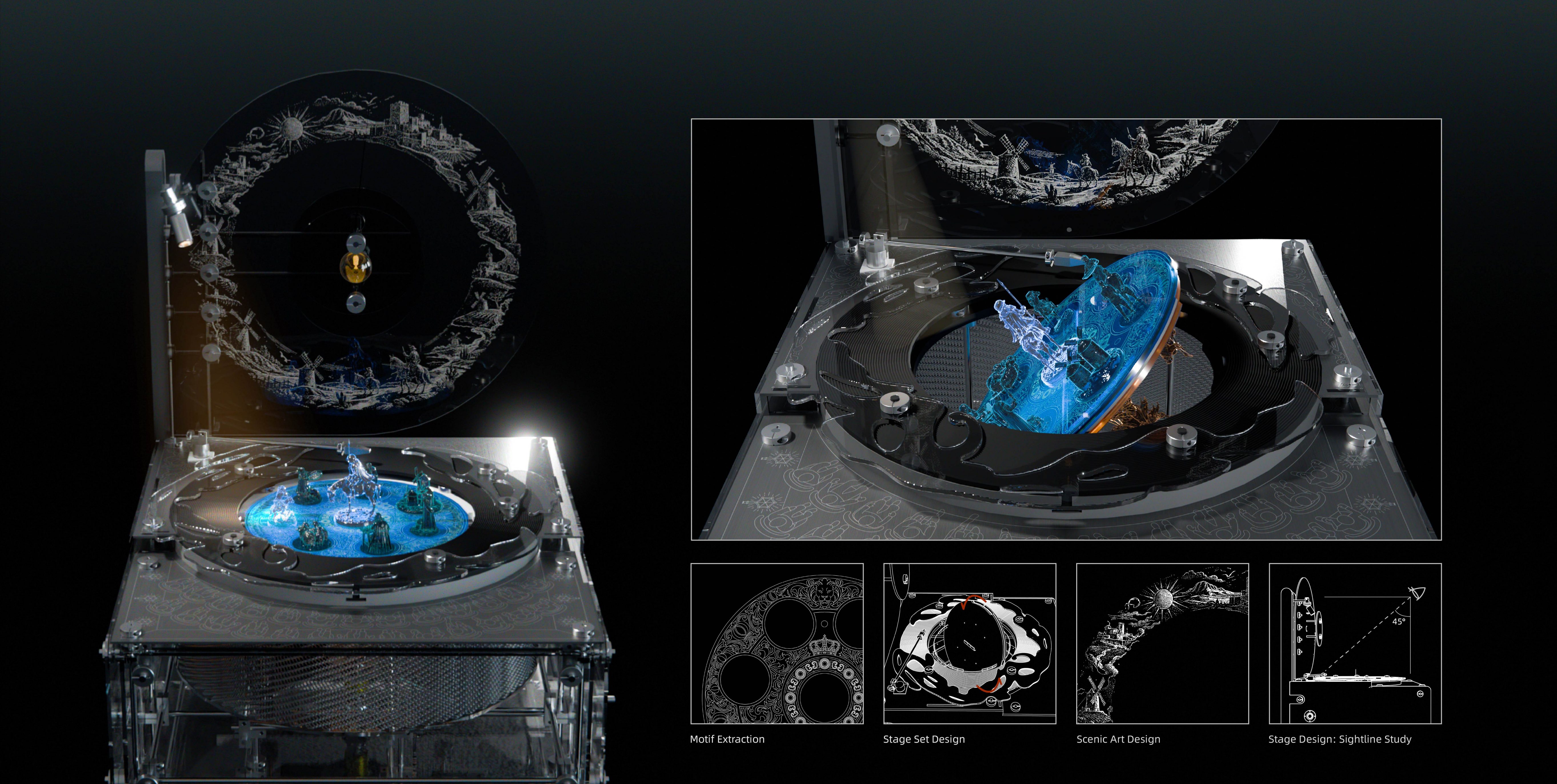
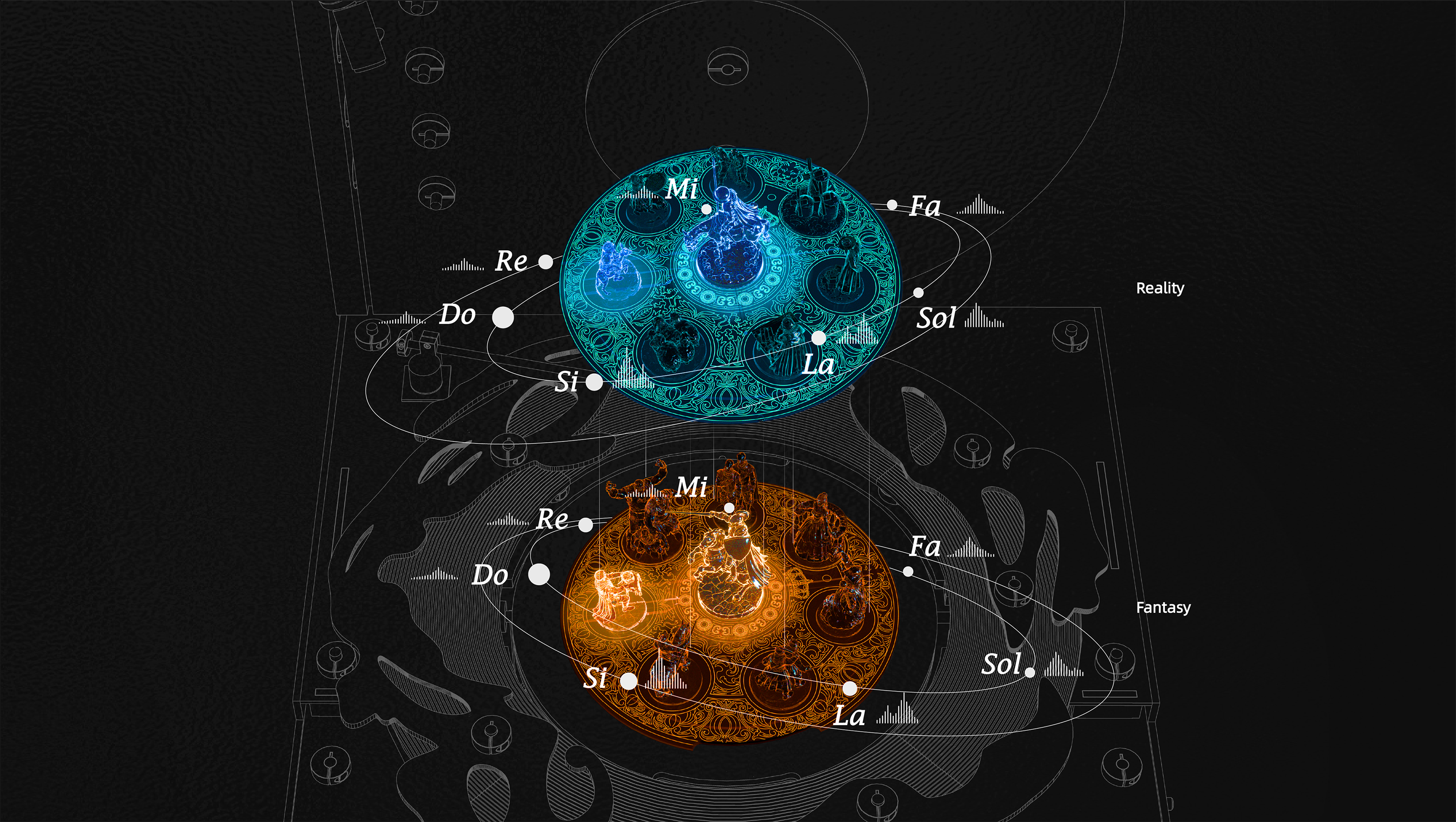
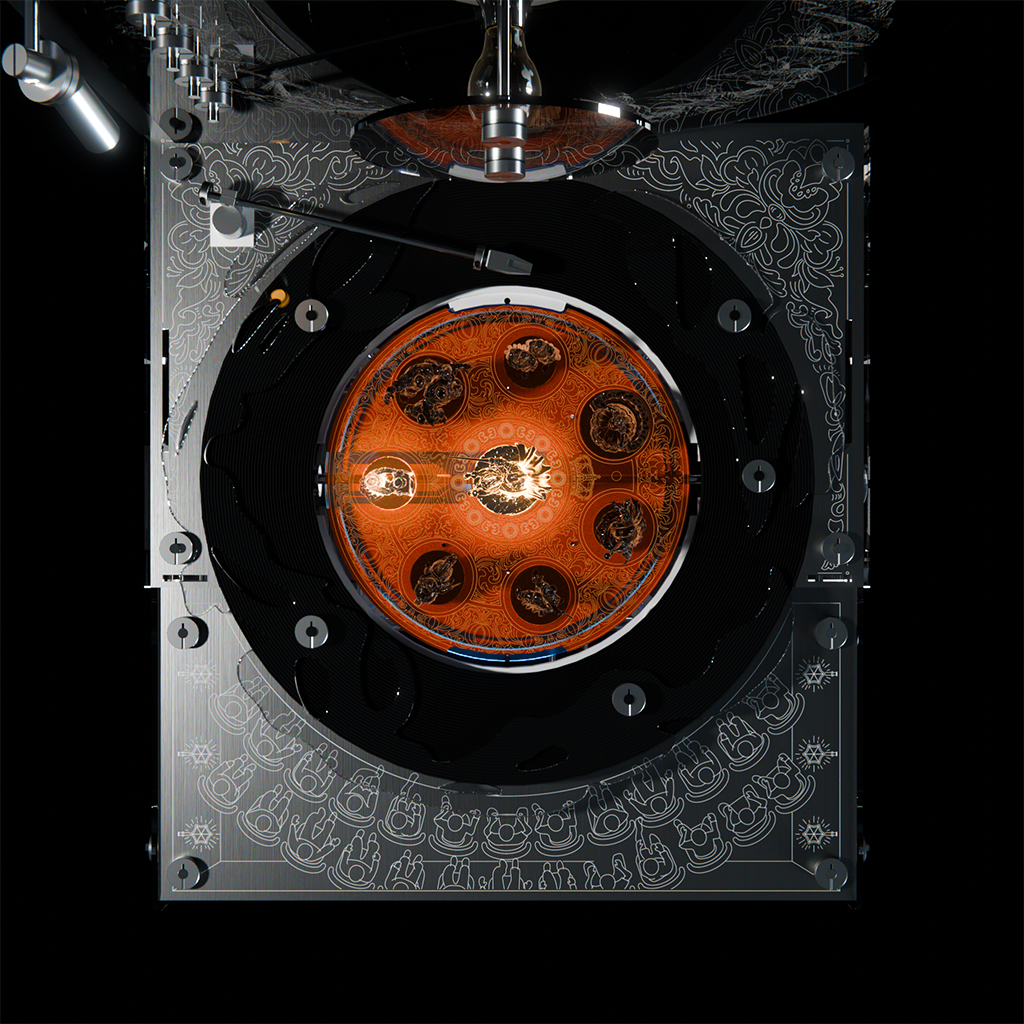
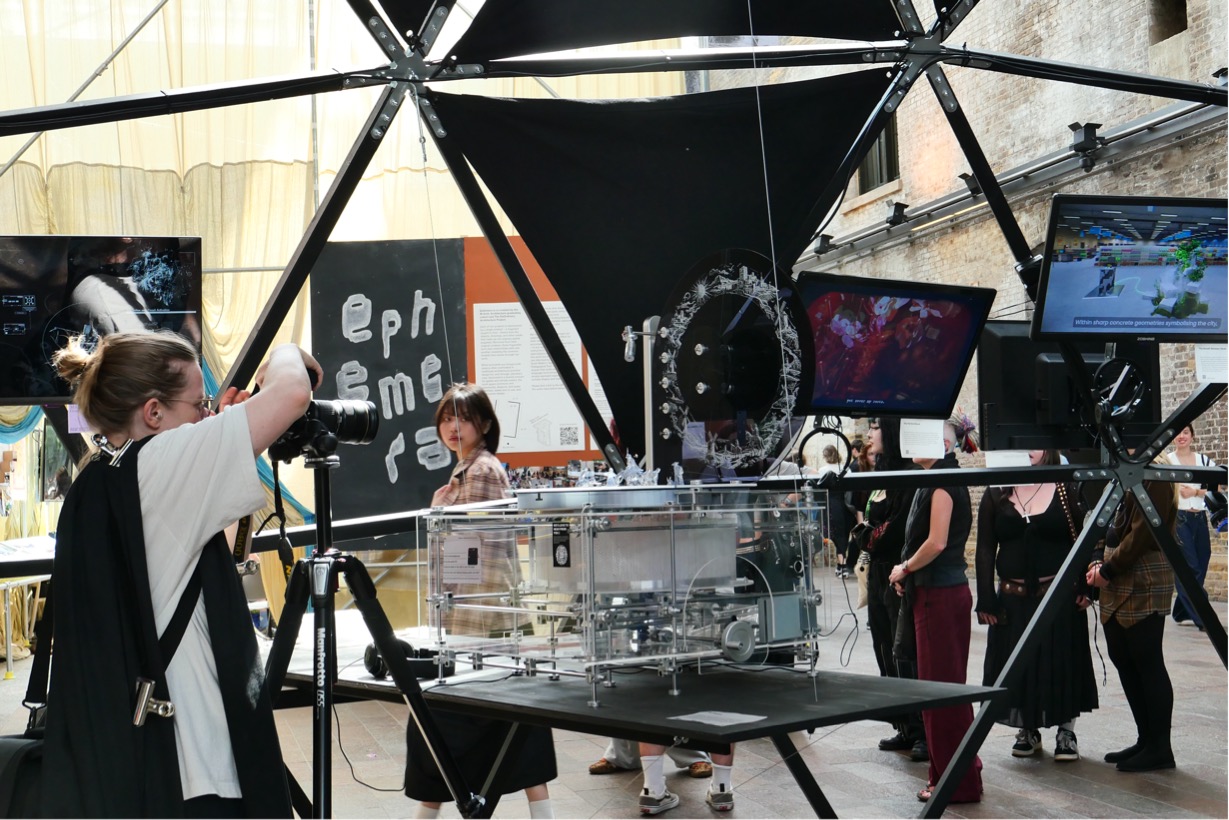
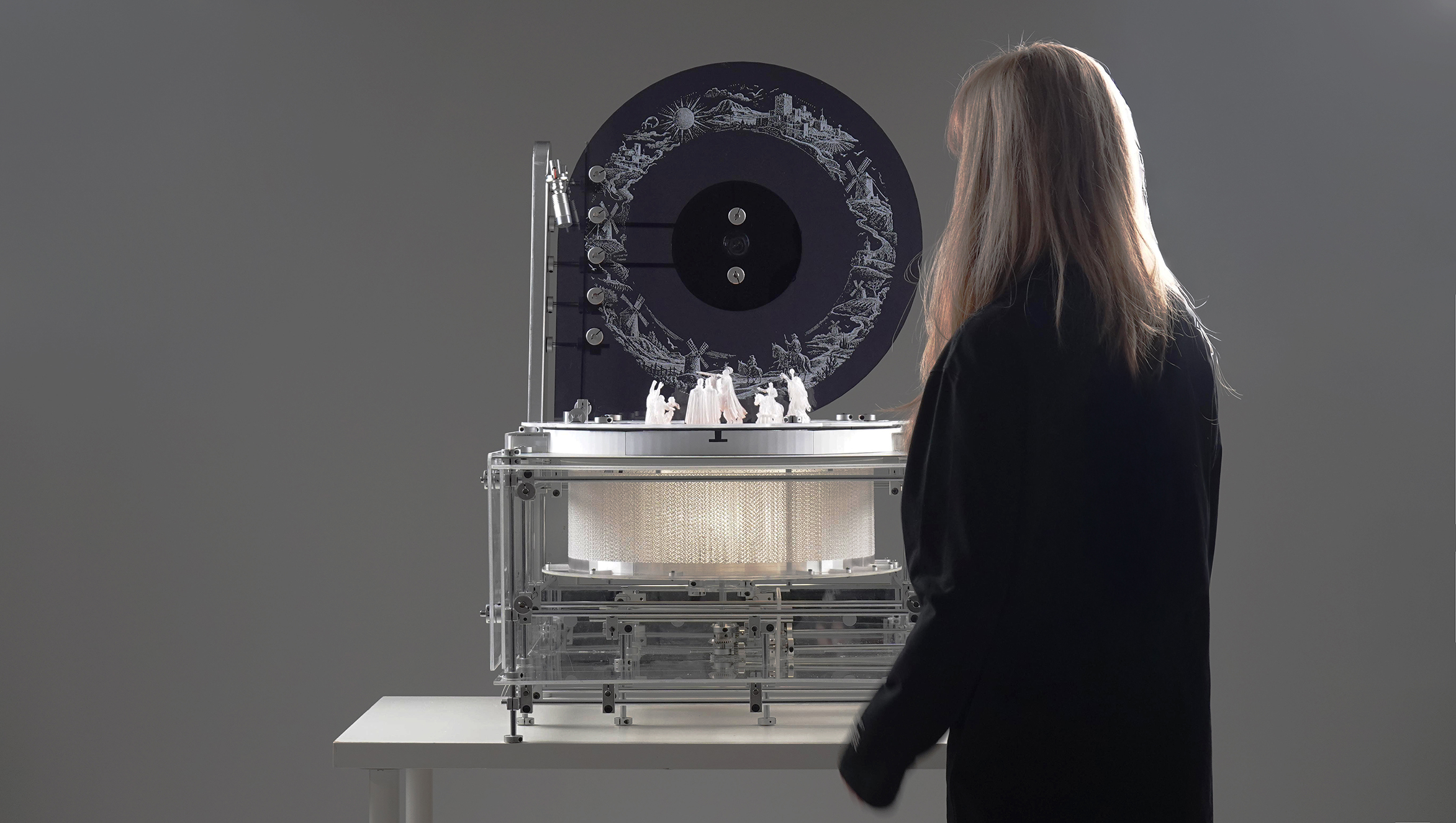
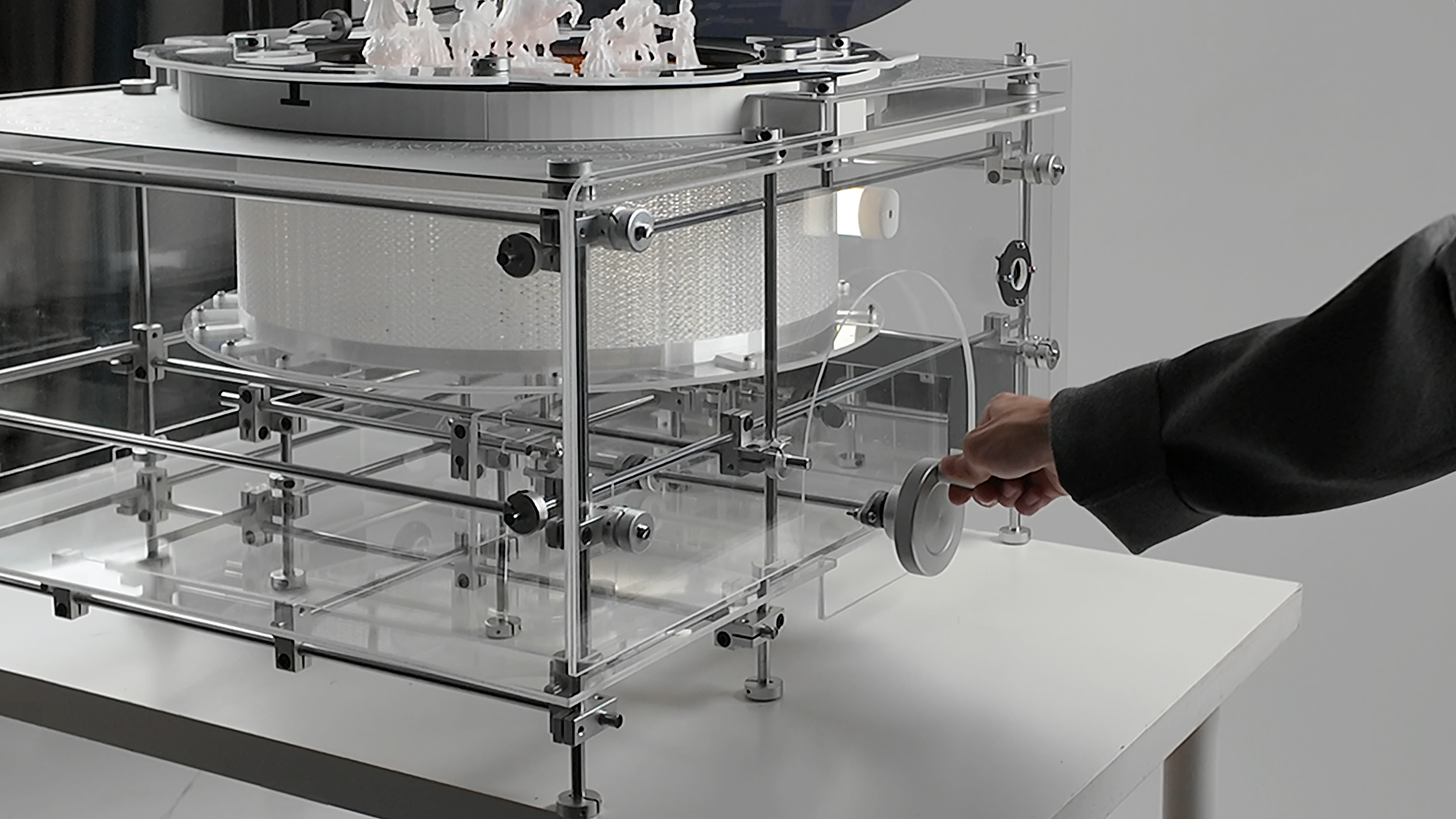
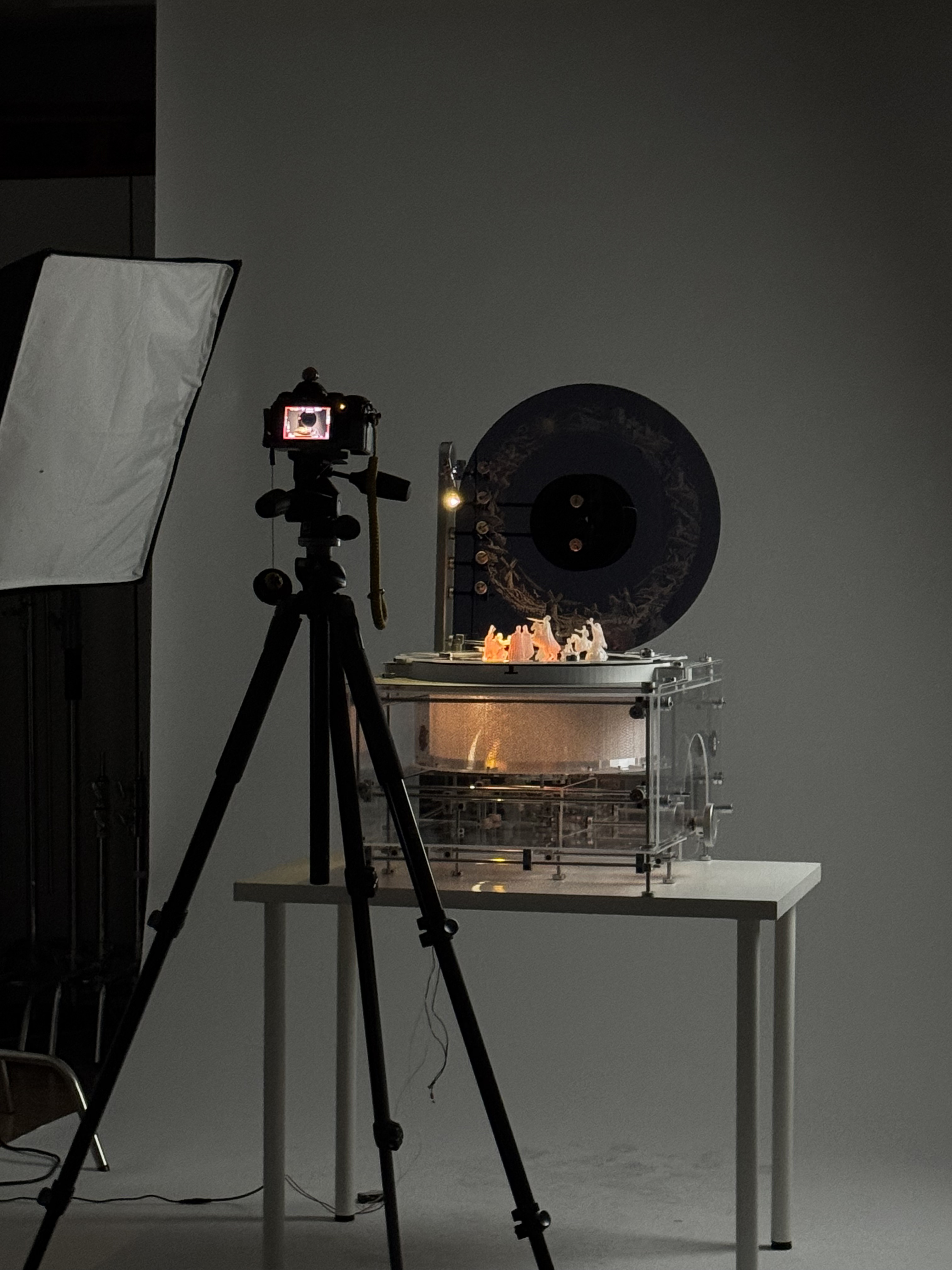
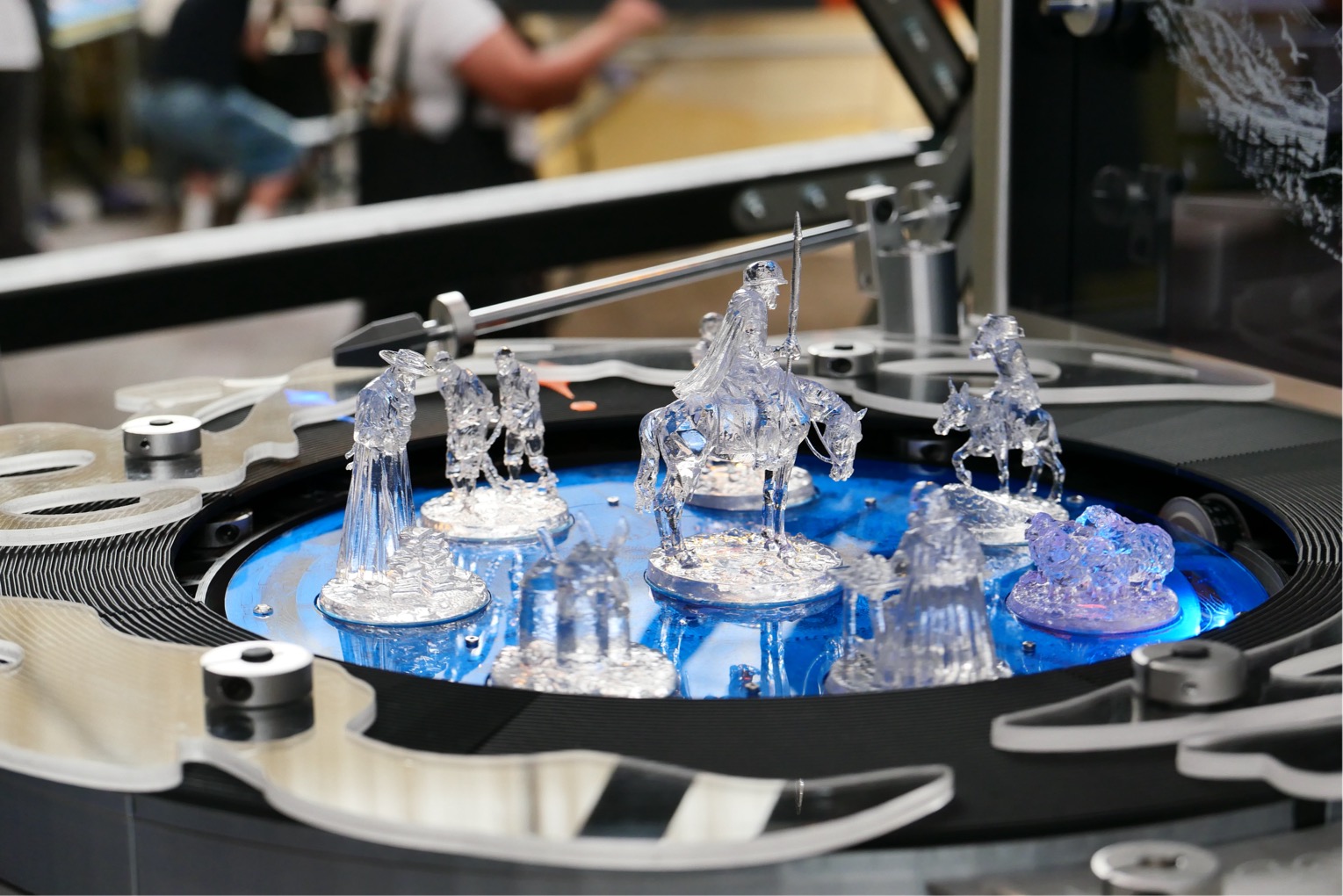
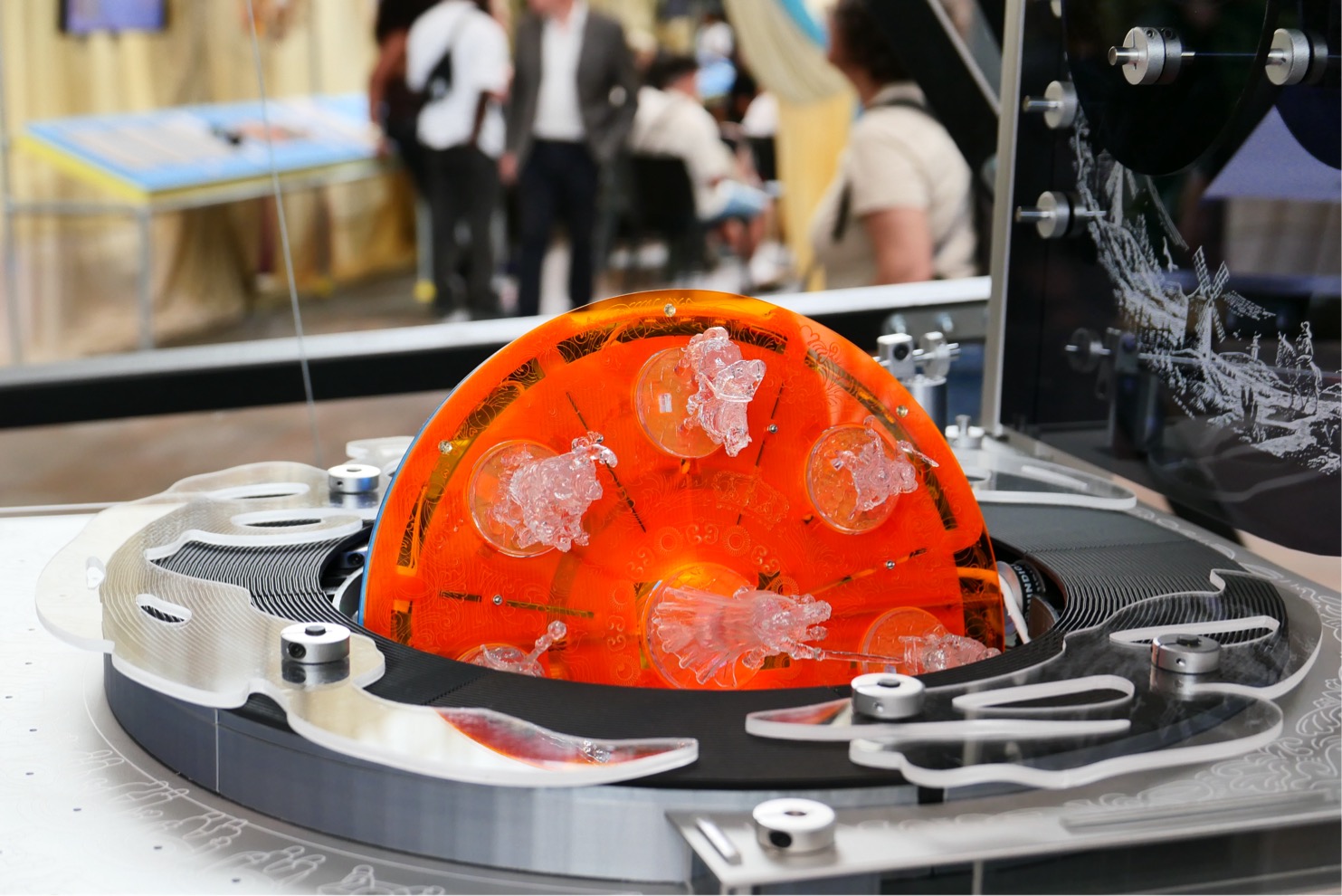
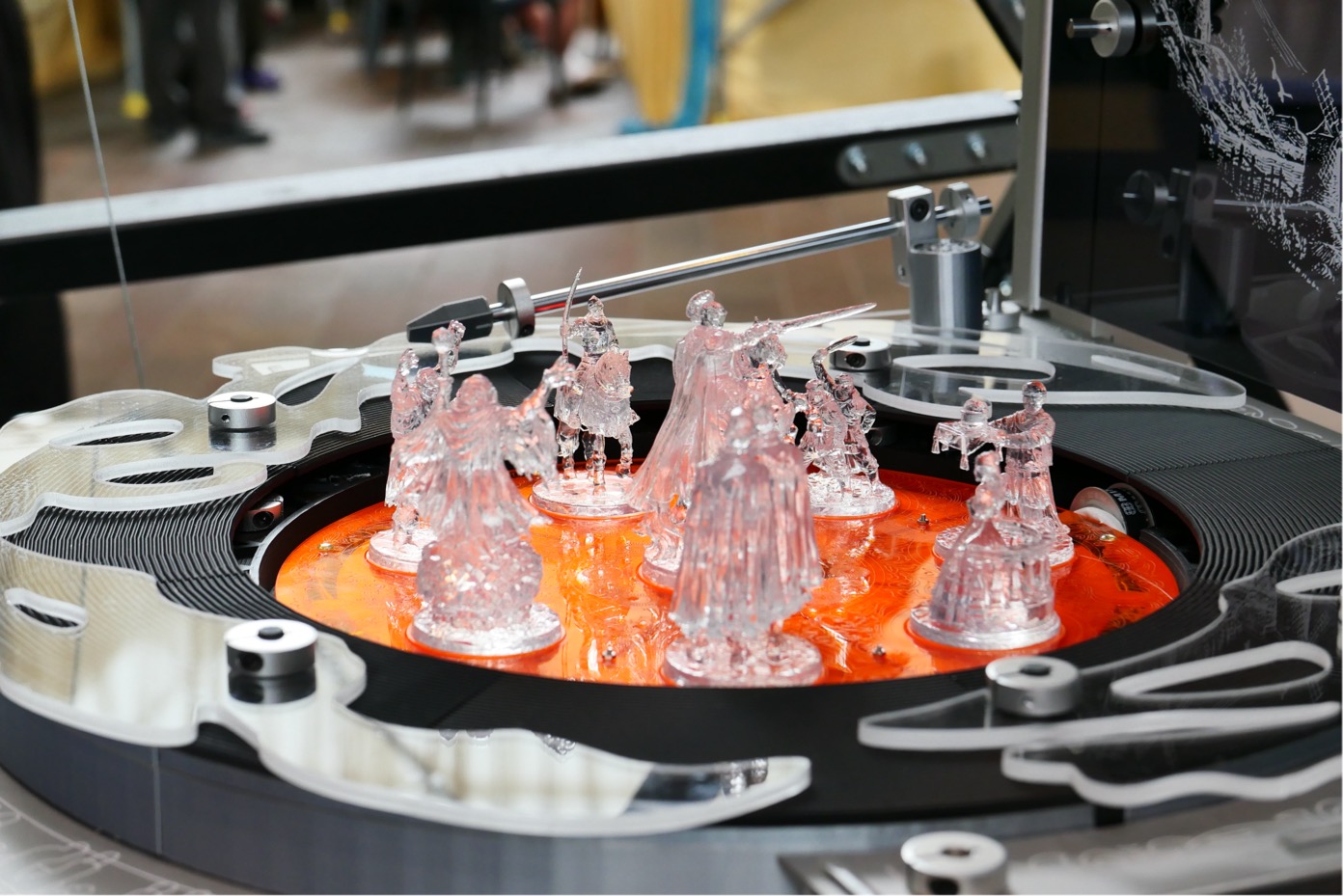
The Director is an interactive mechanical installation shaped like a gramophone, playful yet quietly disciplinary, inspired by Cervantes’ Don Quixote, a knight who believes he is the author of his own fate and story, yet is continuously shaped and constrained by the structures of the world around him. This tension resonates deeply with how people today find themselves caught within technological systems. Drawing on the vinyl record, the gramophone and the music box as its core visual references, the installation translates characters and plot points from the novel into performers, each assigned their own musical note, inviting participants to step into the role of "director" for their own version of Don Quixote. By rotating a handle on the side of the installation, participants control a revolving stage and decide the order in which seven characters appear, freely composing their own performance during a rehearsal phase.
When rehearsal ends and the official performance begins, the director is required to reproduce their composition exactly. What they created during rehearsal now becomes the standard they must follow. As the story unfolds, the background music accelerates, and participants must stick closely to the sequence they established. Any significant deviation results in a penalty. The participant, who believed they were in charge, gradually finds themselves absorbed into the rules they set up. The director becomes an executor, and the simple act of turning the handle, once a creative gesture, becomes repetitive mechanical work. The physical awkwardness of operating the installation at scale reinforces this feeling further.
The work argues that as artefacts develop into complex systems with their own internal logic, that logic begins to take over from human intention. The participant’s sense of having control and making choices turns out to be an illusion. We are being shaped by the very things we have made, and the autonomy we assume we have is just as illusory.
1.3 Why Don Quixote?
We are interested in how humans respond when they become aware that their actions and choices are being shaped by artifacts.
In Don Quixote, we find a shared spirit: a persistent search for autonomy under structures of control. Don Quixote attempts to resist these constraints through imagination, using self-narration as a way to break through the structures that surround him.
Within the context of this project, this spirit is reinterpreted in relation to contemporary technological systems. As artifacts gradually evolve into systems with their own internal logic, human behaviour and choices are increasingly shaped by these structures. Under such conditions, can humans also use imagination and narrative to rethink their position and attempt to reclaim a sense of autonomy?
Therefore, this project takes Don Quixote, a widely circulated work as the foundation for reinterpretation and rewriting.